
Chester Previous Residents by Era
Chester's backward address trail crosses several custodians because Chester is a community in Chesterfield County, not a separate municipal records office. The most recent Chester parcel information supplies a name and deed reference. The Chester clerk's deed index takes that reference back through recorded transfers, while the Record Room, archives, historical libraries, directories, and census schedules cover older stages. Each source answers a different question: a deed describes a transfer, a directory can be an address snapshot, and a census is a dated household record.
| Source | Years It Covers | Where Held | What It Shows |
|---|---|---|---|
| CCC online land index for Chester | Deeds 1967-current; wills 1994-current | CCC Land Records | Name-keyed index; deed book/page and owner bridge from a parcel |
| Chesterfield Record Room | Permanent county records 1749-present | 9500 Courthouse Road | Official books, copies, plats, and Chester file research |
| FamilySearch and LVA Chester deed series | Deeds 1749-1866; general indexes 1749-1913; later catalog series | FamilySearch and Library of Virginia | Older grantor/grantee trail and book/page context |
| Chester regional city and suburban directories | Regional physical runs 1819-present | Richmond Room and Central Library | Address and occupant snapshots, sometimes annual |
| Chester telephone directories | 1970-1972 identified | Chesterfield Historical Society | Subscriber and address clue, not a complete household roll |
| Federal census | Decennial, subject to a 72-year release rule | Census, NARA, and library databases | Names, ages, relationships, and address context |
| Chester Society title abstracts | Mid-1800s through 1930s | Chesterfield Historical Society | Abstracted title and deed research; $25 minimum service |
| Chester permits or code cases | Exact Chester online coverage not located | County GIS or VFOIA fallback | Potential address and date evidence, not a public name index |
Begin with the Chester parcel and current transfer when the question starts in recent decades. For earlier Chester land, move from the online index to the clerk's Record Room, then to FamilySearch or Library of Virginia material. For a person layer, use regional directories and released census schedules after the deed trail gives a date, legal description, or prior name to test.
Chester Previous Residents Starting Point
The Chesterfield County Parcel Viewer provides the bridge from a Chester street address to the land-record index. Record the fields together before opening a deed search. A name alone can repeat, while the GPIN, subdivision, lot or block, deed book/page, sale date, and sale price help keep the correct Chester parcel in view. The popup also separates the parcel address from the owner mailing address, which should not be treated as the same location.
| Parcel identity | GPIN, MPN, Tax ID, parcel type, parcel address, ZIP, subdivision, lot, and block. |
|---|---|
| Ownership and mail | Owner name, owner address, owner city, state, and ZIP. |
| Deed bridge | Deed book, deed page, sale date, and sale price for the next index search. |
| Assessment context | Assessment year, fair-market value, land-use value, improvement value, total assessment, and deeded acres. |
| Map context | Political district, precinct, school fields, and other map layers. |
The Chester viewer popup supplies data and identifiers. Official deed-image access remains controlled by the clerk index or Record Room and may involve account or payment requirements. No Social Security number field appears in the Chester parcel popup, and a popup does not establish that every related county field is publicly available.
Note: Preserve the GPIN and deed book/page with every search note because they are more stable bridges than a street number alone.
Chester Previous Residents Deed Chain
A Chester deed chain follows transfers backward, not a simple address list. In the newest transfer, the grantee is the buyer or present owner and the grantor is the prior owner or seller. Search the prior person's recorded appearance with the legal description, subdivision, lot, deed book/page, or approximate date. Those repeated identifiers make it possible to test whether the next deed concerns the same Chester parcel before stepping further into Chester's past residents trail.
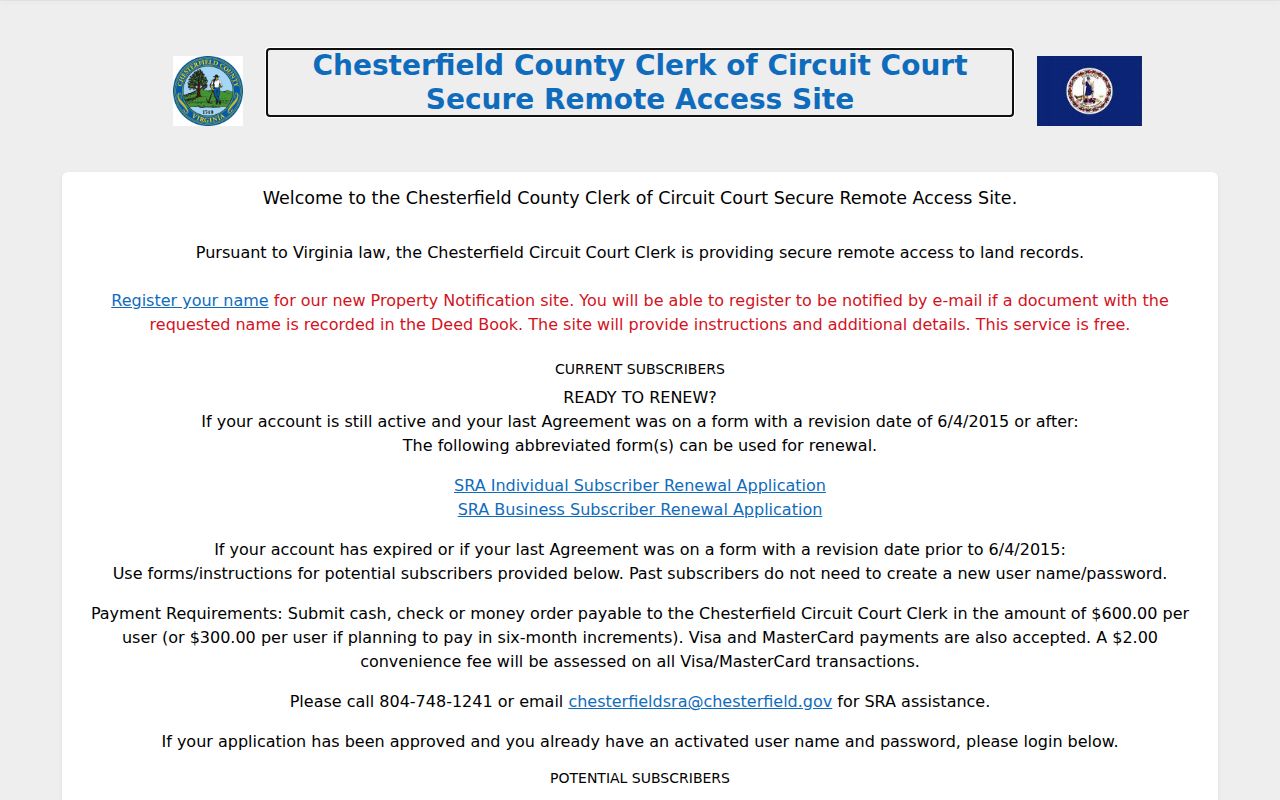
The CCC Land Records index is the documented online start for Chester deeds from 1967 forward. It is name-keyed. A Chester street address by itself is not the index key, so use the parcel viewer's owner and deed book/page first. The image below shows the county's land-record entry route.
The CCC Land Records portal is the source for this Chester deed-index image.
Use the Chester index result to record the book, page, parties, date, and legal description, then compare each earlier transfer before continuing. The online result is a bridge to the official books, not proof that the full older Chester chain is digitized.
- Enter the exact Chester address in the Parcel Viewer and save the GPIN, parcel address, owner name, legal identifiers, deed book/page, and sale information.
- Open the newest Chester transfer in the CCC index with the owner name and deed book/page, then transcribe the grantor, grantee, date, book/page, and legal description.
- Search the prior grantor or grantee from the Chester transfer in the same index and constrain the result with the parcel's legal description, subdivision, lot, or approximate date.
- Repeat the Chester comparison for each earlier transfer. Stop when the evidence no longer ties the deed to the same parcel.
- When the web index for Chester ends, take the recorded book/page trail to the Record Room, older deed books, Library of Virginia material, or FamilySearch images and catalog records.
- Grantor and grantee
- The grantor transfers an interest; the grantee receives it. In a transfer, these names point toward the prior and later land trail.
- Chain of title
- The documented sequence of land transfers for one parcel. It is tested deed by deed, not assumed from a shared street address.
- Legal description
- The lot, block, subdivision, metes, or other recorded parcel wording that helps distinguish one tract from another when street names or numbers change.
Chester Previous Residents Beyond 1967
The Chester numerical gap matters. Chesterfield's online deed index begins in 1967, while the county's permanent land and court records begin in 1749. Wills begin online in 1994. There is no support for claiming a seamless Chester web chain before 1967. The documented fallback is the Chesterfield Record Room at 9500 Courthouse Road, where permanent records are available to the public from 8-4. Recording hours are 8-3:30.
FamilySearch's Chesterfield collection covers deed books from 1749-1866 and general indexes from 1749-1913. The Library of Virginia county catalog describes later Chester deed and court series. Some Library of Virginia reels are not available through interlibrary loan. That Chester access boundary is a normal archival limit, not evidence that a person or transfer never existed.
Chesterfield County was created from Henrico in 1749. Its older Chester trail includes deed books, order books, road books, commissioner bonds, charters, and other series. One marriage register and some loose court papers were lost during the Civil War, a limited but meaningful Chester record gap that should be noted without implying all county records were destroyed.
Chester Previous Residents and Old Maps
An earlier Chester address may be easier to locate through a plat or road name than through a present street number. Chester developed as a railroad town in the 1850s, and the Chester Plan preserves the historic Chester village grid and original street vocabulary. No official source located a specific Chester street-renumbering or street-renaming project year. Bridge the Chester versions with the recorded plat, legal description, directory address section, original name, and map evidence.
The 1888 J. E. LaPrade Chesterfield cadastral map shows roads, districts, some resident names, and 1880 census notes. The 1863 and 1864 regional Chester maps can also connect roads and property names. The Library of Congress LaPrade map record is a useful Chester starting point. By contrast, the public 1895 Manchester Sanborn series supplies wider rail-corridor and built context, not a verified Chester-village directory.
Note: Do not assume a modern ZIP or number matches an 1850s or 1890s source without a plat, map, deed, or directory cross-check.
Chester Previous Residents in Directories
Chester land transfers identify the ownership sequence, but who lived here before can require a different layer. Regional city and suburban directories have physical runs from 1819 to the present at the Richmond Room, although exact Chester shelf runs are not fully published. The Historical Society identifies Chester telephone directories from 1970-1972. These Chester sources can place a subscriber, householder, business, or lodging address at a particular time. The collection details and entry-reading method appear on the Chester city directory page.
- Use the deed chain to choose a narrow period and preserve the original Chester, Chesterfield, Richmond, or Manchester label.
- Check the relevant directory's alphabetical pages and address or criss-cross section, recording each volume year and page.
- Compare the spelling, address number, household notation, and phone entry across nearby directory years.
- Pair the decade with released federal census schedules, then compare names, ages, relationships, and address context.
- Test a departure or arrival through an obituary, cemetery file, probate record, deed, plat, or yearbook instead of assigning a reason from one directory line.
For Chester research, federal census schedules are decennial and subject to a 72-year release rule. An old Chester directory is neither a full household roll nor a present-day status record. It should be read with the year, address type, locality label, and companion record in view.
Chester Previous Residents at Society
The Chesterfield Historical Society research library is the strongest documented Chester house-history support when the online index no longer answers the question. Staff can search title abstracts, vertical files, maps, family files, cemetery records, photographs, and manuscripts. Provide the old and current Chester street name, parcel or lot, approximate construction era, prior names, and any deed book/page so the request can be tied to one place rather than a broad surname.
The Society's title abstracts cover the mid-1800s through the 1930s. Its research request has a $25 minimum, with copies and postage extra. More than 12,000 known burials, more than 5,500 county photographs, and late-1700s through twentieth-century census indexes add ways to test a Chester same-name result. Central Library can pair local directories, yearbooks, newspapers, and microfilm with the Chester land trail.
Chester Previous Residents Trail Limits
Chester obituaries and probate can close a trail after a past owner or household name is established, but neither substitutes for the deed sequence. Richmond and local newspaper microfilm, Historical Society vertical and family files, cemetery records, and circuit probate material can identify heirs or later family context. A will or estate filing may name an heir and a Chester address, while sealed or confidential filings may be unavailable. Every name still needs an independent identity check.
Lawful personal use. Chester previous-resident research is appropriate for house history, family history, estate questions, and personal curiosity. Never use older deed or directory information to track, harass, or harm a living person; Virginia law prohibits stalking.
Virginia's anti-stalking statute sets the legal boundary for misuse of Chester historical data. Chester historical records have normal gaps, changing labels, and unequal access. Keep the evidence trail visible, record uncertainty, and verify a needed official copy with the office that holds it.